
Small openings placed under the overhanging edges of the roof to allow fresh air into the attic and to direct it towards higher exhaust vents. If they are obstructed by insulation, dirt, debris, or improper installation, airflow may be limited and lead to moisture and heat accumulation.
In this guide, we’ll look at how roof ventilation works, the most common ventilation problems inspectors find, warning signs such as frost and condensation, Calgary-specific concerns, and how a Roof Ventilation Inspector assesses the system to identify the underlying issue, not simply recommend adding more vents.
What Is a Roof Ventilation Inspection?
A roof ventilation inspection is the process of testing the overall attic ventilation system. It includes the inspection of intake vents (soffit vents) and exhaust vents (ridge or roof vents) for proper air intake, circulation and escape of air. The inspection also checks for insulation blocking airflow and moisture, condensation, frost and staining.
The purpose is to understand the ventilation system, how it is operating, and what may be impacting the system, instead of just counting the number of vents, so as to accurately determine the underlying ventilation problem.
How Roof Ventilation Works
Roof ventilation follows a simple cycle: fresh air enters through intake vents and warm, moist air exits through exhaust vents. Let’s look at intake vents, exhaust options, and why balanced airflow matters.
- The fresh air comes in through the intake vents
Cool outside air flows into the house through low-level vents installed on the roof or other openings. Cool outside air is brought into the home by low-level vents on the roof or other openings. Insulation, dirt or debris may impede the flow from these vents.
- The air circulates in the attic
The fresh air rises through the attic, assisting in circulating air and minimizing the accumulation of excess heat and moisture. This movement requires a clear movement route through ventilation.
- The moisture condenses and forms rain.
The warmer air naturally flows to the top of the roof when it is hot in the attic. Another cause of excess moisture can be the warm air from the inside coming up through the roof.
- Air is vented out of the machine.
Ridge vents, static roof vents, and gable vents provide a means for warm, moist air to rise out. Powered exhaust fans may also be found in some homes.
- The cycle continues
While air is being expelled through the exhaust, fresh air is drawn into the attic through the intake vents, resulting in constant air movement in the attic.
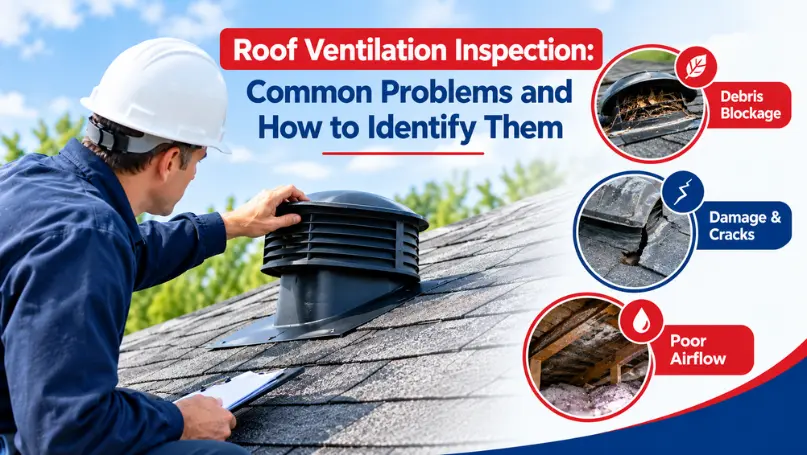
Common Roof Ventilation Problems and How to Identify Them
- Insulation, Dirt, Debris or Nests blocking Soffit Vents: Inspect the openings under the edges of the roof for signs of insulation, debris, dirt, or nests.
- Check for Insulation Blocking Airflow: If the insulation has been compressed over soffit vents or ventilation channels.
- Failure in Intake Ventilation: If the number of intake vents or locations are inadequate, then the amount of fresh air that enters the attic is restricted.
- Blocked Exhaust Vents: Look for snow, nests, or other obstructions in the ridge, roof or gable vents.
- Imbalanced Intake and Exhaust: Too much exhaust and not enough air intake can prevent the ventilation system from moving air.
- Bathroom Exhaust into the Attic: Ensure that bathhausts are vented to exterior of the building instead of into attic space.
- Air Leakage: Any space between the attic hatch, pipe, wiring or other openings can let warm moisture-laden air into the attic.
- Excess Moisture In The Attic: Excess moisture in the attic may be evidenced by frost or water droplets or by water-soaked roof decking.
- Poor Vent Installation: Inadequate air vent placement and/or installation can limit the amount of air the system is designed to move.
- Broken Screens, Nests, Debris or Damaged Vent Covers: Broken screens, nests, debris or damaged vent covers can cause a decrease in airflow and ventilation performance.
Signs of Poor Roof Ventilation in Calgary
These symptoms can present as a ventilation problem or be caused by insulation, air leakage, humid conditions or other water-related problems.
- Winter Signs
Attic Frost: Seeing frost on the roof decking could be a sign that there is too much moisture in an attic that is not well vented and cold surfaces.
Excess Moisture and Insufficient Attic Airflow: Condensation on roof decking or other surfaces can be a sign of too much moisture or limited air flow.’
Ice Dams: Uneven roof temperatures resulting from heat loss, insulation, air leakage and/or ventilation problems can show up as recurring ice dams.
Damp Insulation: Moisture in the attic space is trapped by wet or compressed insulation, and should be evaluated for any additional moisture or deterioration.
- Summer Signs
Unusually Hot Attic: If an attic is excessively hot, this could be a sign of poor air circulation or inadequate exhaust air movement in the attic during hot Calgary seasons.
Condensation: Attic heat does not necessarily mean bad attic ventilation; however, it does mean that upper floors are hot.
Ice Dams: Overheating and dampness could lead to quicker degradation of shingles and other roofing materials with time.
- Year-Round Signs
Musty Odours: A lingering musty odor could signal moisture buildup, inadequate ventilation or an assortment of other attic moisture issues.
Moisture Staining: If there are dark spots or discolouration on the roof decking surface, it could be a sign of water exposure or moisture intrusion in the attic area.
Mould-Like Growth: Mould-like growth may mean there is water activity which needs to be addressed and the source identified and rectified as soon as possible.
Moisture on Roof Decking: Damage to the roof decking (e.g. soft, stained, or damaged) can be a sign of extended exposure to moisture and may have issues with attic ventilation.
How a Roof Ventilation Inspector Find the Root Cause?
A Roof Ventilation Inspector will inspect the entire ventilation system of the attic to identify the source of poor ventilation, heat or moisture. Typical elements of the inspection are:
1. Check the Roof and Attic Setup
The inspector checks the roof design, attic space, insulation and existing ventilation to gain an understanding of how air should flow.
2. Find Intake and Exhaust Vents
Soffit, ridge, roof and gable vents are identified to determine where fresh air is coming in and warm air is going out.
3. Check for Blockages
Vents can become clogged with insulation, dirt, debris or nests, and decreased ventilation can occur. Care is taken to check these areas.
4. Check Insulation
The inspector is on the lookout for insulation on the soffit vents or to prevent the ventilation path.
5. Search for Moisture Signs
Any frost or condensation or water stains in the attic and damp insulation can indicate moisture problems in the home.
6. Check Exhaust Ducts
Exhaust ducts of bathrooms are examined to ensure that moisture is not vented into the attic space.
7. Check the Overall Airflow
The inspector examines the following: intake, exhaust, insulation and moisture to determine if the ventilation system is working properly.
8. Explain the Findings
The inspection report provides essential information regarding the issue and suggests appropriate action to take that will help homeowners to solve the issue, instead of just installing more vents.
Can You Inspect Roof Ventilation Yourself?
Here are a few things homeowners can do:
A simple visual inspection can be done first. Check for attic dirt or debris that is visible in the vents and easy-access areas of the attic. Another way is to look for condensation or frost streaks, water stains, or wet insulation in the cold months of the year. These observations can alert you to an early warning sign of potential ventilation issues.
What Needs Professional Assessment?
For complex ventilation systems, hidden airflow obstructions, and roof-access areas, a professional inspection is crucial. A more in-depth investigation may also be necessary to pinpoint the specific causes of moisture in the attic. If thermal imaging is used, the analysis should be performed by someone who has some knowledge of the potential issues that could be identified in these images and is not assumed to be a diagnosis of a problem.
Conclusion
The best roof ventilation system is one where all components are working together. The issue can be bigger than a missing vent if airflow is blocked, moisture is accumulating or vents are not properly balanced. A Calgary professional Roof Ventilation Inspection can help determine the true problem and help prevent unnecessary damage.
You’ll have a better understanding of your attic’s ventilation, moisture, and insulation so you can make informed decisions with greater confidence about your home with Trueye Home Inspection.