
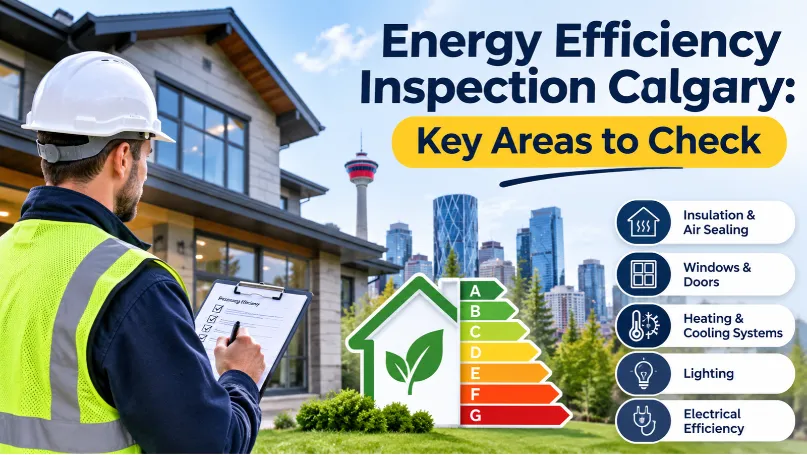
An Energy Efficiency Inspection Calgary is a process that a homeowner arranges for to determine just how effective a house is at retaining heat, at using up energy, and at keeping the inside of the house comfortable. It can detect potential insulation, air leakage, window, heating equipment, and ventilation problems. Depending on the service, a diagnostic test may also detect hidden air leaks or temperature differentials. This information can guide homeowners and prospective buyers to pinpoint energy wasters and opportunities for energy upgrades.
Since Calgary’s winters are so cold, keeping warm is especially crucial; however, an effective furnace isn’t always the answer. The heating system is required to do more work if there is insufficient insulation, or warm air can leak out through openings.
What Is an Energy Efficiency Inspection in Calgary?
An Energy Efficiency Inspection Calgary rates the efficiency of a home to keep warm and cool indoor temperatures while conserving energy. It reviews building materials, insulation, windows, air leakage, heating system, and ventilation that can help in identifying the place where energy is lost, temperature differentials from room to room and any potential efficiency issues. These results can assist homeowners in comprehending the sources of higher energy costs and any home improvements that could make their house more energy efficient.
- Insulation: Inspects walls and attics for proper heat insulation.
- Air leakage: Detects leaks at windows, doors, and other openings.
- Heating and ventilation: Evaluates system performance, airflow, and potential energy loss.
It may also come with diagnostic testing and real-world suggestions, such as repairing or sealing air leaks, enhancing insulation, or improving the heating system.
Key Areas Checked During an Energy Efficiency Home Inspection
1. Attic Insulation and the Building Envelope
Insulation reduces the transfer of heat from inside to outside or vice versa. During the winter in Calgary, if insulation is either lacking or poorly distributed, a roof assembly may permit the escape of a large percentage of the heat.
Accessible insulation can be inspected for gaps, compression, displacement and moisture damage. Attic hatches and openings around pipes or wiring also need to be addressed as poorly sealed penetrations can lead to air leakage.
But it’s not always enough to add insulation. The air leakage and moisture conditions must also be taken into account to prevent new building problems.
2. Air Leaks Around Windows and Doors
Air leakage is the intrusion of outdoor air into a building or the loss of conditioned indoor air from the building through unintended openings. Typical areas are window frames or exterior doors, around building materials and plumbing penetrations.
Weatherstripping, caulking, and gap checks can detect damaged weatherstripping, worn caulking and obvious gaps. The overall airtightness can be measured, and leakage pathways can be suggested by a blower door test if one is provided.
Filling up unwanted gaps might help for convenience but it is important that we still allow good air circulation in the house. The aim is to manage unwanted air movement without retaining excess moisture or indoor air contaminants.
3. Furnace and Heating System Performance
Energy use for heating can be a significant part of energy use in a cold climate. Thus, its condition, maintenance, and effectiveness in dispersing heat are of concern.
A furnace may be inspected by an inspector to view its external appearance, maintenance records, readily accessible connections and overall functioning. Detailed combustion testing or mechanical diagnostics may require a qualified HVAC technician.
Not all furnace problems can be addressed by an efficient furnace. Homeowners must determine if the problem is in the equipment or if there is another area of the home where heat is being lost before they invest in replacement equipment.
4. Windows and Exterior Doors
Heat transfer is influenced by the glazing, frames, seals and installation of Windows and Doors. So can damaged seals and gaps around frames can lead to drafts and uncomfortable indoor temperatures.
An inspection can determine if repairs or enhanced weatherstripping is necessary, or if additional evaluation is warranted. It’s not always the best fix to replace all the old windows, especially if the issue is actually related to the rest of the house, like poor attic insulation or air leakage.
5. Ventilation and Indoor Air Quality
Ventilation gets rid of old and excess air and brings fresh air to the body. Accessible exhaust fans, ventilation equipment and evidence of inadequate moisture control may be investigated.
Where these are installed, heat recovery ventilators (HRVs) and energy recovery ventilators (ERVs) can recover a portion of the energy from the exhaust air as it is brought in from the outside. To be effective, they must be installed, maintained and operated properly.
When reducing air leakage, take note that there are ventilation issues. All condensation, excess humidity and musty smells should be investigated and not dismissed as a minor nuisance.
6. Ductwork, Airflow, and Thermostat Settings
A heating system can be very efficient in producing heat, but not necessarily very efficient in distributing it to the home. Sometimes rooms are colder than others as a result of leaking ducts, limited ventilation, and unbalanced registers.
During an inspection, problems with ductwork can be seen and examined, and thermostat placement and general operation settings can be examined. When one bedroom is cold and the living room is comfortable, raising the thermostat might use more energy to heat the house, but it doesn’t help the bedroom.
Knowing how to fix the problem means homeowners will not have to adjust or replace their equipment if the problem is nonessential.
How Diagnostic Testing Identifies Hidden Energy Loss
Visual checks reveal many problems, but some deficiencies require specialized equipment for further investigation.
- Blower door testing: A calibrated fan creates a pressure difference across the building envelope to measure airtightness and help locate leakage pathways. The results do not directly predict utility bill savings.
- Infrared thermography: A thermal imaging camera identifies surface temperature patterns that may indicate missing insulation, air leakage, or thermal bridging. Results depend on weather, temperature differences, and correct interpretation.
- Heating system testing: Qualified specialists can investigate combustion performance, equipment faults, or other mechanical concerns that exceed a general visual inspection.
- Ventilation assessment: Depending on the service, testing may evaluate airflow and ventilation-system operation to help establish whether indoor air exchange is adequate.
Not every property needs every test. The appropriate methods depend on the home’s condition, the problems observed, and the inspection’s intended purpose.
How to Prioritize Energy Efficiency Improvements?
An inspection may identify several potential improvements, but addressing everything immediately is not always practical. The better approach is to prioritize work according to its urgency, cost, and likely impact.
- Address safety and moisture concerns first. Investigate suspected combustion problems, significant water intrusion, and persistent moisture through appropriately qualified professionals.
- Correct major air leaks and insulation deficiencies. Target confirmed weaknesses while considering ventilation and moisture management.
- Resolve heating and ventilation problems. Investigate equipment faults and airflow restrictions before assuming complete replacement is necessary.
- Compare major upgrade costs. Evaluate window replacement and heating equipment upgrades against the property’s condition, installation costs, and expected benefits.
- Review results after improvements. Compare energy consumption over similar periods while accounting for weather, occupancy, and changes in household behaviour.
| Improvement | When to consider it | Key consideration |
| Air sealing | Confirmed unwanted air leakage | Maintain adequate ventilation |
| Attic insulation | Insufficient or uneven insulation | Address relevant air and moisture issues |
| Furnace repairs | Faulty or poorly maintained equipment | Obtain specialist testing when needed |
| Window repairs | Damaged seals or noticeable drafts | Replacement may not be necessary |
| Ventilation upgrades | Inadequate airflow or moisture control | Protect indoor air quality |
The most valuable improvement is not necessarily the most expensive one. It is the one that addresses a genuine deficiency without creating another problem elsewhere.
What to Expect From Professional Home Energy Inspection in Calgary
A Professional Home Energy Inspection in Calgary should provide a clear understanding of the property’s energy-related condition, the inspection’s limitations, and the improvements worth considering.
Before booking, homeowners should clarify the service scope and reporting process.
- Confirm the inspection coverage. Ask whether the assessment includes accessible insulation, windows, air leakage, heating equipment, and ventilation.
- Ask about diagnostic testing. Confirm whether blower door testing or infrared imaging is included or available at an additional cost.
- Request a written report. Establish whether findings will include explanations of observed deficiencies and practical recommendations.
- Clarify specialist requirements. Ask whether HVAC technicians or other qualified professionals may be needed to investigate specific concerns.
- Check certification requirements. If an EnerGuide evaluation is required, confirm that the provider follows the applicable assessment process.
A clear scope helps homeowners compare providers fairly and use the findings when planning repairs or evaluating a property before purchase.
Conclusion
The combination of insulation, air sealing, heating, and ventilation is essential to an energy-efficient home. With the help of an Energy Efficiency Inspection Calgary homeowners make, they will be able to spot the weaknesses and make sure to prioritize the necessary improvements.
Call Trueye Home Inspection to talk to them about your home inspection requirements in Calgary and find out which home inspection is right for your home.