
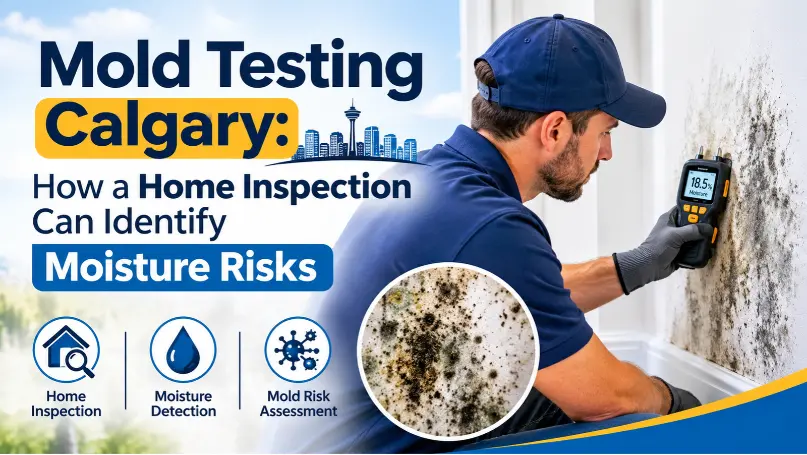
A fresh coat of paint or a newly renovated basement can make a home look spotless, but neither tells you what is happening behind the walls. Mold can start to grow long before it is visible in insulation, under flooring, or in poorly ventilated areas, where moisture may still be trapped. Musty odors or dark spots may have already indicated a problem when they are first detected.
For Calgary homeowners, seasonal snowmelt, winter condensation, and hidden water leaks can create conditions that encourage mold growth. A home inspection can help determine if there is moisture in the home that could be a cause of mold, and a mold testing Calgary service can help investigate suspected mold. Knowing both can assist you with making better decisions and prevent a minor moisture problem from becoming a big repair bill.
What Does Mold Testing Calgary Actually Reveal About a Property?
Mold testing is the process of taking samples of the air or surface where the mold is suspected to grow and examining them to determine whether mold spores or fungal growth is present. Samples can be sent to a lab for analysis to determine if mold is present in the areas being sampled.
However, test results do not necessarily provide information on the source of the moisture, or if mold is growing within hidden building materials. Even if the air sample is negative, it doesn’t mean that the whole property is mold-free.
This is where a home inspection comes in handy. It examines accessible portions of the property for moisture issues like water stains, plumbing leaks, condensation and drainage issues.
It’s crucial to know the distinction between these services:
- Mold testing: Analyzes samples that have been collected to check for mold spores or actual growth of the mold.
- Moisture detection: Detects wet materials and conditions that can create mold problems.
- Home inspection: Inspection of visible parts of the house and identification of possible defects associated with moisture.
These services can work together, but they have different functions. If sampling is appropriate, Mold Testing Calgary can provide additional information or if a home inspection is done, it can also help determine if there is a need for further investigation.
Why Calgary Homes Can Develop Hidden Moisture Problems?
Mold growth often begins with a moisture problem that remains unnoticed. In Calgary, seasonal weather changes can affect roofs, foundations, exterior walls, and indoor ventilation.
Three situations deserve particular attention.
1. Snowmelt and foundation moisture
Once snow has melted, water may pool around the house. Basement moisture can be a risk due to poor exterior grading, damaged drainage or downspouts that drain too near the house.
2. Ice dams and roof leakage
Where melting snow refreezes at the edges of the roof, ice dams may develop. Water can then get under the roofing materials, which can then compromise roof sheathing, insulation, and interior ceilings. If water stains are found in the attic or in upper-level rooms, there may be a need to investigate further.
3. Winter condensation
During colder months, warm indoor air can meet cold windows, exterior walls, and poorly insulated surfaces. The differential temperature can cause condensation, especially if the indoor humidity is high and the indoor air is poorly ventilated.
These conditions do not automatically mean mold is present. The potential of mold formation does increase when moisture is trapped in building materials, however. A Mold Inspection in Calgary can be performed at the right time and can assist in determining if there is a need for specialized attention or if there is a problem.
How a Home Inspector Traces Potential Moisture Problems
A useful home inspection looks beyond individual stains or damp patches. It considers how different parts of a property work together to identify possible water entry points and conditions that may allow moisture to accumulate.
The process generally involves several important checks.
1. Reviewing the property’s history
Previous flooding, plumbing repairs, roof leakage, and basement renovations provide useful context. Buyers should find out whether earlier water damage was properly addressed or whether only the visible surfaces were repaired.
2. Following possible water entry points
Inspectors examine accessible areas around roofs, windows, exterior walls, foundations, and plumbing connections. For example, staining below a window may require checking its seals and surrounding exterior materials rather than simply repainting the interior wall.
3. Investigating suspicious materials
Peeling paint, bubbling drywall, discolouration, and damp surfaces can indicate moisture exposure. A moisture meter may help assess suspicious materials and determine whether further investigation is necessary.
4. Assessing ventilation conditions
Bathrooms, kitchens, laundry rooms, and attic spaces deserve attention because they regularly experience moisture exposure. Inspectors may examine accessible exhaust systems and identify conditions that could contribute to condensation.
5. Documenting inspection findings
Photographs, inspection notes, and relevant moisture readings help homeowners understand where concerns were identified. These findings can also guide discussions with qualified contractors or mold assessment professionals.
Thermal imaging may provide additional information about unusual temperature patterns, but it does not directly detect mold or confirm moisture. Its findings must be interpreted alongside other inspection observations.
This is an important part of Mold Testing Calgary investigations because identifying a possible moisture source can help determine whether further testing is actually needed.
Mold Inspection Calgary: What Different Findings Can Tell You
Not every sign of moisture points to the same underlying problem. Understanding possible explanations helps homeowners decide what needs further investigation.
| Inspection observation | Possible explanation | Recommended action |
| White deposits on basement walls | Moisture movement through masonry | Check drainage and foundation conditions |
| Dark staining below windows | Previous or ongoing water intrusion | Examine window seals and surrounding materials |
| Damp attic insulation | Roof leakage or condensation | Investigate roofing and attic ventilation |
| Musty smell in a finished basement | Possible concealed moisture | Arrange further assessment |
| Elevated moisture near bathroom fixtures | Plumbing leakage or poor ventilation | Check connections and exhaust systems |
These observations are clues, not proof of mold. For instance, white deposits on basement walls may be efflorescence, which occurs when water carries dissolved minerals through masonry. Similarly, dark staining alone cannot establish the presence or type of mold.
A professional Mold Inspection Calgary assessment focuses on understanding the surrounding conditions and identifying where additional investigation may be necessary. This helps homeowners avoid treating every stain or discolouration as a confirmed mold problem.
When Should You Consider Professional Mold Testing?
Not every moisture concern requires laboratory testing. Sometimes, repairing a leaking pipe, improving drainage, or correcting ventilation is the immediate priority. However, specialist mold assessment may be appropriate in certain situations.
Consider professional mold testing when:
- You suspect hidden contamination: Persistent musty odours or unexplained moisture may require further investigation, especially when the source cannot be located.
- The property has experienced significant water damage: Flooding, sewage backups, or prolonged leaks may affect concealed building materials.
- Mold growth keeps returning: Repeated growth often indicates that the underlying moisture condition has not been resolved.
- A substantial affected area is discovered: Extensive suspected growth may require professional evaluation and a suitable remediation plan.
- Testing can guide a specific decision: Sampling may be useful when results could influence remediation or property repair decisions.
The purpose of Mold Testing Calgary should be clear before samples are collected. Testing without understanding the moisture problem may provide limited practical value. In many cases, investigating and correcting the source of moisture is the first priority.
Mold Testing Home Inspection in Calgary: What Should Homebuyers Know?
A property’s previous water damage can be just as important as its visible condition during a viewing. Items such as fresh paint, new flooring and renovated basement walls can enhance the look of your home, but it cannot confirm that previous moisture issues have been addressed.
Home inspection and mold testing are two different services when it comes to arranging a home in Calgary for inspection. A home inspection is an examination of certain components in the home that can be inspected, and warning signs are discovered. If there is a reason to investigate further, then specialist testing may be recommended.
Here are some factors to take into account before buying a new mattress:
- Inquire about past water damage: Inquire whether the property has flooded, had its roof leak, pipes burst or basement seeped.
- Analyse repair documentation: Verify that records document the nature of the problem, repair actions taken and any remedial action required.
- When inspecting a renovated basement, check to see if moisture problems were addressed before the new drywall, insulation or flooring were installed.
- Investigate strange smells: If the area has been recently renovated, but there is an unusual smell, it should be investigated.
- Schedule specialist assessment when needed: If there are serious moisture issues that are discovered during an inspection, consult a specialist for advice before committing to the purchase.
No home inspection can guarantee that all hidden defects will be found. It can assist those who are purchasing property, though, to know the conditions of the property that they are interested in and the things that need to be looked into.
Conclusion
The issue with mold is often a moisture issue that is overlooked or not resolved. Calgary homeowners need to grasp how water enters the house, where it gets stored and why it stays in the house to safeguard the structure.
When a specific reason exists to investigate a suspected mold issue, Mold Testing Calgary can offer valuable insights. A professional home inspection will help you identify obvious warning signs, determine if there are any possible moisture issues, and pinpoint any areas that need more investigation. The importance of dealing with the water source can’t be overstated when trying to prevent any future issues.
Trueye Home Inspection has delivered professional home inspection services to Calgary homeowners to assist them in making informed decisions. When buying a house or looking at a house to sell, get an inspection to know what you’re getting yourself into before it gets into your head.
Contact Trueye Home Inspection today to schedule your home inspection in Calgary.