
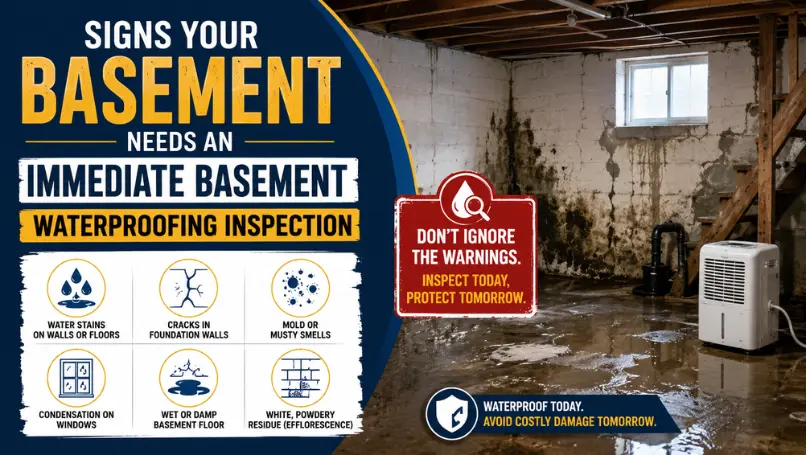
Most basement water issues are subtle, and signs of trouble such as water stains, small cracks and musty smells can manifest themselves long before there are major problems. Ignoring these issues can lead to mold growth, foundation deterioration, poor indoor air quality, and costly repairs.
The basement waterproofing inspection, if performed at the right time, can help to detect the presence of moisture in the basement, locate the point of water entry and avoid potential structural issues caused by minor water issues.
In this blog, we’ll cover the key signs that indicate it’s time for a Basement Leakage Inspection, what causes these issues, and when professional evaluation is the best way of action.
Why a Basement Waterproofing Inspection Should Never Be Delayed?
Even minor moisture issues can lead to major damage if ignored. Here’s why scheduling a Basement Waterproofing Inspection early is essential:
- Hidden Damage Before Visible Leaks: Leaks can occur behind walls, under flooring, into insulation, and long before it is noticed. A professional inspector will be able to find hidden moisture at an early stage, which will help to prevent any major damage and costly restoration.
- Protects Structural Integrity: Over time, moisture can cause concrete to become weak, expand cracks in the foundation, and thus affect the stability of your home. The first inspections can alert to structural concerns before major and costly foundation work is needed.
- Maintains Better Indoor Air Quality: In damp weather, mold and mildew tend to grow in your home, which makes the air quality worse and causes unpleasant odors. Moisture issues can lead to a healthier, more comfortable lifestyle when they are taken care of early.
- Preserves Your Home’s Value: Buyers may lose confidence in the property due to water damage, mold, and foundation problems that have affected the property. Regular Basement Leakage Inspection services assist maintain the condition and long-term value of your home.
- Reduces Long-Term Repair Costs: Repairing minor water intrusion costs much less than the cost of fixing structural damage, mold, or damaged finishes. Early inspections will get to the issue’s source before minor problems can become costly issues.
12 Warning Signs You Need a Basement Leakage Inspection Immediately
1. Persistent Musty Odors
One of the first signs of too much moisture is a musty odor. If your basement appears dry, but you suspect water is behind finished walls, under flooring, or within insulation, it is a mold and mildew breeding ground.
- The importance: As moisture spreads, it can remain unseen and impact indoor air quality and cause deterioration of building materials over time.
- Frequency of inspections: If the smell can still be detected after a few days, after rain or after any cleaning, it is time to have a Basement Waterproofing Inspection.
2. Wet Basement Walls or Wet Basement Floors:
Walls and floors that are damp or wet even after the rain has stopped for a while can be signs of water leakage in the foundation or bad drainage from the house. One other area of potential moisture accumulation is where basement walls meet the floor, where basement walls are in contact with the ground, and along the perimeter of the foundation.
A Basement Leakage Inspection can help identify the source of the dampness, even if it’s located in one spot, before it gets worse, before it becomes a Hydrostatic Pressure or a Drainage failure or Foundation deterioration problem.
3. Water Stains or Discoloration
If the walls, ceilings or concrete surfaces are stained yellow, brown or dark, it is likely that there is a history of or current water intrusion. Staining usually indicates the presence of persistent moisture, which will recur during wet or cold conditions in the season.
Do not just repaint damaged areas; get the area professionally inspected to determine the source of the water damage and to eliminate it.
4. White Powder (Efflorescence) on Concrete Walls
Water that flows through concrete, leaving chalky white deposits on its surface, is called efflorescence. The deposits may not be harmful in themselves, but they are definite signs of moisture permeating your foundation.
If efflorescence keeps reappearing, a Basement Waterproofing Inspection will be able to identify where the water is infiltrating and suggest what should be done to waterproof the basement.
5. Mold or Mildew Growth
If you notice mold on the ceilings, corners, walls or stored items, it should never be ignored. The mold growth is only visible when there is enough moisture available, which can be a sign of a bigger water intrusion issue.
A comprehensive basement leakage inspection can be used to identify the source of the moisture, instead of continuing to treat the mold on the surface.
6. Cracks in Basement Walls or Floors
Not all cracks are structural problems, but horizontal cracks, cracks that widen, stair-step cracks and cracks where there is rain leakage should be addressed right away. These openings can provide groundwater ingress and are also signs of foundation movement.
Each crack is inspected by a professional to assess the size, direction and severity of the crack, and whether the crack needs to be waterproofed, structurally repaired, or monitored.
7. Standing Water/Puddles After Rain
After heavy rains one of the most obvious indications of the presence of water in your basement is puddles. It can be caused by blockage of footing drains, inadequate grading, clogged gutters, damaged waterproofing or foundation cracks.
Temporary inconvenience is never the option for standing water. Basement Waterproofing Inspection services can be done on the spot to determine the location of the water entry before extensive damage or mold growth occurs.
8. Peeling Paint or Bubbling Drywall
If the paint bubbles, flakes or peels for no apparent reason, it means moisture lies behind the surface. Likewise, when drywall continues to swell, soften, or warp this indicates that water is continuing to enter the home.
Also, before replacing cosmetic finishes, look at the moisture source to prevent further damage and costly renovation.
9. Rust on Metal Fixtures or Appliances
Rust is frequently a problem on water heaters, furnaces, exposed pipes, support columns, or electrical panels, and is usually caused by constant moisture or unnoticed moisture in the basement. Corrosion can lead to reduced lifespan of important equipment and may be a sign of other moisture issues.
A thorough Basement Leakage Inspection will identify if it is excess humidity, condensation or water intrusion that is causing the issue.
10. Increased Basement Humidity
You might be dealing with basement flooding even if you don’t see any water leaking, even if the basement feels unusually humid, sticky, or damp compared with the rest of the house. Also, high humidity could lead to mold growth, wood rot, and musty smells.
A professional inspection will assess moisture levels, locate sources of moisture, and suggest effective waterproofing or drainage measures.
11. Bowing Or Bulging Basement Walls
Excessive soil pressure due to saturated ground around the foundation can be indicated by inward-leaning walls or bulging or bowing walls. This isn’t just a waterproofing problem; it can be a sign of structural problems.
These can get worse over time, but it is best to have a Basement Waterproofing Inspection as soon as possible to determine water intrusion and foundation stability.
12. Water Around Basement Windows or Window Wells
The water that accumulates around basement windows and/or in window wells is often caused by clogged drains, inadequate grading, broken seals, or overfilling gutters. When it rains hard, this water can rapidly become a problem in your basement, potentially damaging adjacent walls and flooring.
A professional Basement Leakage Inspection will check window wells, drainage systems, grading, and foundation seals to determine the cause and provide long-term solutions, not just temporary fixes.
Conclusion
The small amount of moisture can easily escalate into bigger problems, including foundation damage, mold growth, and expensive repairs if not addressed. By understanding these early warning signs and scheduling a professional Basement Waterproofing Inspection, you can help prevent damage to your home’s structure, indoor air quality, and the long-term value of your home.
If you have seen any of these problems, do not delay in addressing them, as they may worsen. With Trueye Home Inspection, you can get a comprehensive inspection to find water intrusion that you may not be able to see, determine where it is coming from, and make the right recommendations to prevent minor problems from becoming major repairs.